


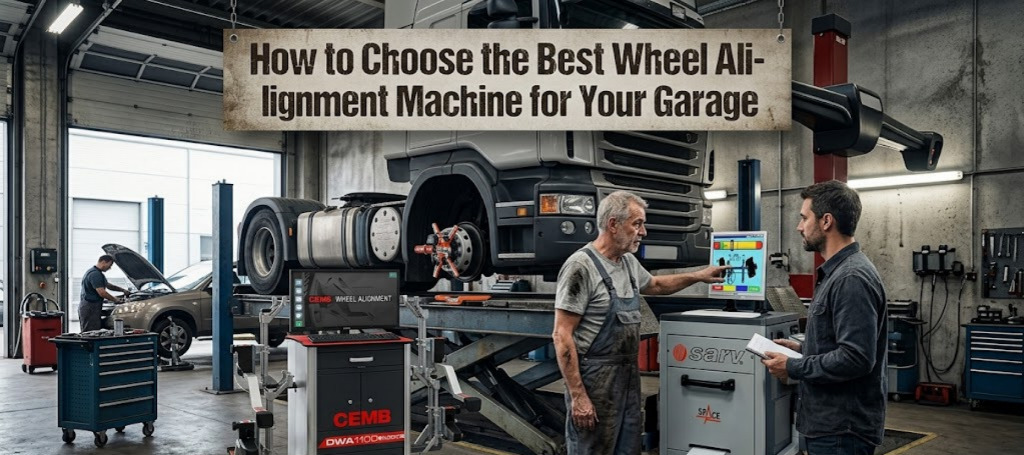
Running a successful auto repair workshop requires delivering accurate service with fast turnaround times. Wheel alignment services are among the most lucrative daily offerings for any auto service center. However, to maximize profitability and precision, knowing how to choose the best wheel alignment machine for your garage is a vital business decision.
Investing in the right alignment technology speeds up service bay workflows, prevents premature tyre wear, and ensures customer safety on the road. With various technologies available—ranging from traditional CCD systems to advanced 3D and touchless aligners—selecting the ideal setup depends on your garage size, daily vehicle volume, and budget.
Why Upgrading Your Wheel Alignment Equipment Matters
Modern vehicles come equipped with advanced driver-assistance systems (ADAS), precise suspension geometry, and complex steering mechanisms. Legacy alignment tools often struggle to deliver the calibration standards required by modern car manufacturers.
Here is why getting the best wheel alignment machine is crucial for your business:
- Increased Profit Margins: Wheel alignment services offer high profit margins with low ongoing operational consumable costs.
- Higher Customer Retention: Precise alignment eliminates steering pull and uneven tread wear, building strong customer trust.
- Faster Bay Throughput: Advanced alignment systems take measurements in seconds rather than minutes, allowing your technicians to service more cars per day.
Key Types of Wheel Alignment Machines Explained
Understanding the underlying technology is the first step when evaluating wheel alignment systems for your workshop.
1. 3D Wheel Alignment Machines
3D wheel aligners use high-definition digital cameras paired with passive target plates mounted on the vehicle’s wheels.
- How it works: The cameras track the position of optical targets in 3D space to calculate caster, camber, toe, and kingpin inclination instantly.
- Best for: High-volume garages and commercial service centers looking for speed, durability, and minimal maintenance (no electronics on the wheel clamps).
2. CCD (Charge-Coupled Device) Wheel Aligners
CCD systems utilize electronic sensor heads mounted on each wheel that communicate wirelessly via Bluetooth or radio frequency to a central console.
- How it works: Optical sensors measure angles between heads to map wheel geometry.
- Best for: Medium-sized workshops seeking high accuracy on a moderate budget.
3. Touchless Wheel Alignment Systems
Touchless aligners use advanced lasers and robotic camera systems to scan tyres and rims as the vehicle drives into the bay.
- How it works: Technicians do not need to attach any clamps or targets to the wheels.
- Best for: Dealerships and high-end luxury auto bays prioritizing zero-contact wheel safety and ultimate speed.
Core Factors to Consider When Selecting an Aligner
When evaluating options for your facility, keep these vital criteria in mind:
Bay Space and Ceiling Height
Camera-based 3D aligners require adequate distance in front of or beside the lift to maintain an unobstructed line of sight. If your service bay has limited space, a space-saving post-mounted camera tower or wireless CCD system may be more suitable.
Software Interface and Vehicle Database Updates
The software powering your aligner should feature an intuitive user interface with visual 3D graphics. Ensure the manufacturer provides regular OEM vehicle database updates so your shop can service the latest car models without delay.
Lift Compatibility
Verify whether the alignment machine works seamlessly with your existing lifting equipment, such as 4-post lifts, scissor lifts, or pit setups.
Explore our complete range of certified garage lifts and alignment accessories at https://garageequipments.com.
ROI Comparison: Finding the Right Fit for Your Workshop
Selecting equipment depends heavily on balancing upfront capital expenditure against long-term return on investment (ROI).
| Alignment Technology | Initial Cost | Measurement Speed | Maintenance Needs | Ideal Garage Type |
| CCD Wireless | Moderate | Standard (3-5 mins) | Regular Head Calibration | Small to Medium Garages |
| 3D Camera System | Moderate to High | Fast (under 2 mins) | Low (No wheel electronics) | High-Volume Service Bays |
| Touchless Laser | Premium | Ultra-Fast (Drive-thru) | Low | Dealerships & Premium Bays |
Essential Accessories to Pair with Your Alignment Machine
To deliver complete wheel service, equip your bay with these essential secondary tools:
- Steering Wheel Holders & Brake Pedal Depressors: Standard accessories to lock steering alignment during adjustment.
- Turnplates (Rotary Plates): Premium heavy-duty turntables ensure smooth front-wheel movement during caster sweeps.
- ADAS Calibration Systems: Essential for recalibrating lane-assist cameras and radar sensors following mechanical alignment adjustments.
Official safety standards and vehicle maintenance practices outlined by the Automobile Association (AA).
Step-by-Step Alignment Service Workflow
1. Vehicle Bay Drive-In  --> 2. Mount Targets / Sensors --> 3. Rapid 3D Camera Scan
                                                                      |
6. Print Customer Report <-- 5. Mechanical Adjustment  <-- 4. Review Live Screen Data
Knowing how to choose the best wheel alignment machine for your garage comes down to assessing your daily vehicle volume
Available bay layout, and long-term expansion goals. Upgrading to a modern 3D or wireless aligner ensures your technicians work faster, deliver pin-point accuracy, and keep your service bays humming with profitable business.
Ready to upgrade your workshop with industry-leading wheel alignment technology?
Explore Our Premium Range of Garage Equipment at Garage Equipments Today!
Frequently Asked Questions (FAQs)